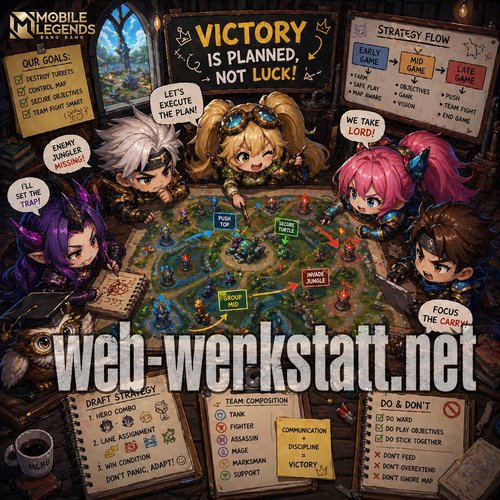
Understanding Which Enemies Deserve Immediate Attention
web-werkstatt.net – In Mobile Legends: Bang Bang, choosing which opponent to attack is one of the decisions that can determine the outcome of an entire engagement. Players often focus on enemies with the lowest health because eliminating a vulnerable target appears to be the fastest way to gain an advantage. Although securing an easy elimination can be valuable, the weakest opponent is not always the greatest threat. A nearly defeated tank may be less dangerous than a full-health mage preparing a powerful ability, while an enemy marksman positioned safely behind the frontline may have the potential to deal enormous damage if left undisturbed. Effective threat prioritization requires players to evaluate what each enemy can do, how quickly they can influence the fight, and what might happen if they are allowed to continue acting without interruption.
The first step is understanding the difference between vulnerability and danger. Vulnerability describes how easily an enemy can be eliminated, while danger refers to the opponent’s ability to create harmful consequences for your team. These two characteristics sometimes overlap, but they are not identical. An assassin with low health may still possess enough mobility and burst damage to eliminate a teammate before being defeated. A mage with full health may be the most important target because a single area-control ability could prevent your team from approaching an objective. A tank may have little immediate damage but can create opportunities for the enemy’s damage dealers by controlling movement and absorbing pressure. Players who recognize these distinctions can avoid wasting time attacking opponents who are not currently responsible for the greatest danger.
Threat assessment should also consider the enemy’s available abilities. A hero with an important ultimate skill ready may represent a greater immediate threat than the same hero after using it. A marksman who has access to a powerful defensive tool may be difficult to eliminate despite appearing isolated. An enemy fighter with an available mobility ability may suddenly reach the backline, while a mage without key control skills may be temporarily less dangerous. Players should therefore observe enemy actions rather than evaluating targets only through their health bars or positions. The abilities already used, the cooldowns that may remain, and the distance between opponents can all influence which target deserves attention.
Equipment and level advantages also affect threat priority. An enemy who has completed important offensive equipment may deal significantly more damage than another opponent with similar health. A hero who has gained several levels may have stronger abilities and better combat potential. Meanwhile, an opponent who has fallen behind may still be dangerous because of crowd control, mobility, or a specific ability that can interrupt your team’s formation. It is important not to assume that a low-economy enemy is harmless. Players should examine the complete situation, including hero characteristics, equipment progression, and the current stage of the match.
Another important consideration is the consequences of allowing an enemy to remain active. Some opponents become dangerous because they can eliminate teammates directly, while others create opportunities that benefit the entire opposing team. A support who repeatedly protects the enemy marksman may be more important to the enemy’s survival than their individual damage suggests. A mage who controls a narrow jungle entrance may prevent your team from approaching an objective safely. A fighter who repeatedly pushes a side lane may force your team to divide its attention. Threat prioritization becomes more effective when players think about the strategic influence of each opponent rather than treating every enemy as an isolated target.
Recognizing Threats According to Hero Roles
Hero roles provide useful clues about the responsibilities and potential dangers of opposing players. Although individual heroes can perform different functions depending on their builds and compositions, their general roles help players understand what kind of threat they may create. Marksmen usually become increasingly dangerous when they receive enough time and protection to deal sustained damage. Mages can control important areas and produce powerful bursts or crowd-control effects. Assassins threaten vulnerable targets through mobility and sudden damage. Fighters can pressure several positions depending on their abilities, while tanks and supports influence how safely their teammates can operate.
Marksmen often deserve attention when a fight develops into a prolonged engagement. Their sustained damage can gradually overwhelm a team if they remain undisturbed. However, approaching a protected marksman without considering the enemy frontline can be a serious mistake. A player who dives directly into several opponents may be eliminated before reaching the intended target. It may be more effective to remove the protection around the marksman first, force the hero away from a comfortable attacking position, or wait until an important defensive ability has been used. Threat prioritization should create a realistic path toward reducing the opponent’s influence rather than encouraging reckless attacks.
Mages present a different challenge because their impact can be concentrated into particular moments. Some can disable multiple heroes, while others can eliminate fragile targets with a well-timed combination. Their threat may be especially high before a team fight begins, when both teams are approaching the same area. A mage controlling an entrance or preparing an area ability can make it difficult for your team to advance. Players should pay attention to the mage’s positioning and skill usage. If a major control ability has already been spent, the enemy may temporarily have fewer ways to stop an engagement. If it remains available, your team may need to approach from a different direction or wait for a safer opportunity.
Assassins are often dangerous because they can change their target quickly. Their presence may force marksmen and mages to remain cautious, even when the assassin is not immediately visible. Players should consider the possibility of an ambush when an enemy assassin disappears from the map. Supports and tanks can help reduce this threat by maintaining protective positions and preserving defensive abilities. The assassin may not always be the correct target to chase, but preventing access to vulnerable teammates can significantly reduce the enemy’s influence. A successful defense may involve forcing the assassin to retreat rather than eliminating them.
Fighters, tanks, and supports should not be ignored simply because they may appear less threatening in terms of direct damage. Fighters can disrupt formations, chase weakened targets, or maintain pressure in extended engagements. Tanks can initiate fights and create space for damage dealers. Supports may provide healing, shields, control, or other forms of protection that make the opposing team difficult to defeat. Sometimes the most valuable target is the hero enabling everyone else. If a support repeatedly prevents your team from eliminating the enemy marksman, applying pressure to that support may create a better opportunity than attacking the marksman directly.
Role awareness is most useful when combined with observation. Two heroes from the same role may create very different threats because of their abilities, equipment, and positioning. A mage with strong long-range control may influence a fight before it begins, while another mage may need to move closer to deal meaningful damage. A tank with reliable initiation may be more dangerous during an objective contest than a tank whose abilities are primarily defensive. Players should use roles as an initial guide, then adjust their priorities according to what each enemy actually does during the match.
Considering Positioning, Access, and Immediate Danger
Positioning determines how easily an enemy can influence a fight and how difficult it will be to respond. A powerful marksman positioned behind several teammates may be dangerous in theory but difficult to reach immediately. An assassin standing near a vulnerable teammate may represent a more urgent threat because the distance between them is already small. A mage controlling a narrow path can prevent your team from advancing even without attacking anyone. Understanding these differences helps players prioritize threats according to the current battlefield rather than following a fixed target order.
Distance is one of the simplest factors to evaluate. Enemies who are close enough to use their abilities effectively may require immediate attention, especially if they are approaching a fragile teammate. However, distance alone does not determine danger. A hero with long-range abilities may influence the fight from far away, while a melee opponent may be harmless if unable to reach an appropriate target. Players should consider effective range, mobility, and available routes. An enemy who appears distant may still be capable of initiating quickly, while another opponent standing nearby may lack the resources to create meaningful pressure.
Access to important targets is equally important. A marksman may be protected by a tank, but an assassin could reach them through a side route. A mage may be separated from the team yet still have a clear angle for an area ability. A fighter may stand near a teammate who has already lost most of their health. Players should evaluate which opponents have the clearest opportunities to influence vulnerable allies. This makes threat prioritization more responsive because it focuses on the danger that can actually occur rather than theoretical damage potential.
The shape of the battlefield can also change enemy importance. Narrow jungle passages make area-control abilities more dangerous because multiple heroes may be forced into limited space. Open terrain can provide marksmen with better opportunities to maintain distance. Bushes create uncertainty because an opponent may approach without being seen. Turret areas introduce additional restrictions because players must consider structure damage and enemy access. A hero who is relatively manageable in an open lane may become much more dangerous when controlling a narrow entrance near Lord.
Players should also account for their own team’s condition. An enemy assassin may be the greatest threat when your marksman has low health, but a powerful mage may become more important when several teammates are grouped together. If your team has a durable frontline and strong protection, it may be possible to withstand a direct attack while focusing on a different target. If your formation is scattered, even a moderately dangerous opponent may exploit the separation. Threat prioritization is therefore not simply about identifying the strongest enemy. It is about identifying the enemy most capable of harming your team in its current condition.
Making Better Target Decisions in Team Fights
Team fights create complex situations because several enemies may become dangerous at the same time. Players must identify immediate threats while also considering which opponents will become more influential if allowed to remain active. Attacking the closest target is often convenient, but it may not be the most effective choice. A tank standing in front of the enemy team may absorb damage while the opposing marksman attacks freely. A mage preparing a powerful control ability may be more important than a fighter who is already retreating. Players need to distinguish between accessible targets and strategically valuable targets.
A useful approach is to evaluate the enemy formation before committing major abilities. Look for the opponents who can immediately threaten your teammates, the heroes protecting the main damage dealers, and any enemies who have already used important skills. This assessment does not need to take several seconds. Experienced players can recognize the most important patterns quickly through repeated practice. The goal is to avoid entering a fight without understanding which enemy actions could create the greatest problems.
Target selection should also reflect each player’s role. Assassins generally have more opportunities to reach vulnerable damage dealers, while tanks may be responsible for controlling the enemy frontline and protecting teammates. Marksmen often need to attack accessible targets without exposing themselves to unnecessary danger. Mages can use their abilities to interrupt dangerous opponents or control the area around the fight. Supports may focus on preventing an enemy from reaching a vulnerable ally. These responsibilities can overlap, but players should understand that not everyone needs to attack the same target to contribute effectively.
One common problem occurs when several teammates chase a low-health enemy while another opponent continues dealing damage from a safe position. The chase may appear productive because the target is close to elimination, but the team could lose more health or even several players before securing the kill. Players should consider whether the target is realistically reachable and whether pursuing them creates a dangerous opening. Sometimes the correct decision is to stop chasing, turn toward the active threat, and protect the formation. A surviving enemy who has been forced away from the fight may already have lost much of their immediate influence.
Another important factor is the timing of major abilities. Players should avoid spending powerful skills on opponents who are already controlled by teammates or who cannot meaningfully threaten the team. If an enemy assassin has entered the backline, a defensive control ability may be more valuable than using it against a tank at the front. If a mage is preparing an area attack, interrupting that action may prevent significant damage to several allies. These decisions require coordination because multiple players may have different ideas about which opponent deserves attention. Clear communication and awareness of teammate actions can reduce wasted abilities and make the team’s combined damage more effective.
Adjusting Priorities During Objective Contests and Defensive Situations
Objective contests often require a different approach to threat prioritization because the team’s goal is not always to eliminate the opposing lineup. Protecting access to Turtle or Lord, controlling nearby entrances, and preventing the enemy jungler from approaching may be more important than securing several eliminations. Players should identify which opponents can interfere with the objective and respond accordingly. The enemy jungler may become the highest priority when the objective is close to being secured, while an enemy mage may deserve attention earlier because their area control prevents your team from approaching safely.
The timing of the contest changes which enemy matters most. Before an objective begins, a hero who clears waves or controls a nearby jungle entrance may influence the team’s ability to establish a good position. During the contest, the jungler and heroes with strong displacement or crowd control may become more important. After the objective is secured, the remaining enemies may pose a threat through a counterattack or pursuit. Players should therefore reassess targets as the situation develops rather than maintaining the same priority throughout the entire encounter.
When defending a turret, the most important threat may be the opponent enabling the siege. An enemy marksman attacking from a safe distance can gradually destroy the structure, while a tank prevents defenders from approaching. A mage may control the area around the turret and punish anyone attempting to clear minions. In these situations, attacking the tank may not solve the problem if the damage dealer continues to pressure the structure. Defenders should focus on safely clearing the wave, interrupting dangerous approaches, and forcing the siege formation to lose its position. Eliminations are valuable, but preserving the turret and preventing additional damage may be the more important result.
Defensive situations also require players to consider when not to fight. If the enemy has a significant numerical advantage, pursuing the most dangerous opponent may expose the team to further losses. Sometimes the best response is to retreat, protect the remaining structures, and wait for teammates to respawn. Threat prioritization includes understanding which enemies should be avoided until the team has enough resources to challenge them. A low-health opponent may appear attractive, but attempting to reach that target could place a defender directly inside the enemy formation.
When your team is ahead, priorities can change again. The opponent may become more dangerous because of their ability to defend from a protected position or punish an overextended attack. A team with an economic advantage should avoid giving the enemy unnecessary opportunities to eliminate isolated players. Instead of chasing every visible opponent, players can focus on controlling entrances, maintaining safe spacing, and removing the heroes who can disrupt the team’s objective plans. The ability to recognize when an enemy is dangerous because of their position rather than their strength is an important part of maintaining an advantage.
Developing Consistent Threat Assessment Through Practice
Threat prioritization becomes more reliable when players develop habits that help them evaluate situations quickly. Instead of making every decision based on instinct, they can learn to check several important details whenever an engagement begins. These include enemy abilities, hero roles, equipment advantages, positioning, available escape routes, and the condition of nearby teammates. Over time, this process becomes faster because players recognize familiar situations and understand which factors are most relevant to their chosen heroes.
One useful practice is reviewing team fights after a match. Players can examine moments when they focused on a target that had little influence while another opponent caused significant damage or controlled the battlefield. They can also identify situations in which they chased an enemy too far, used a major ability on an unsuitable target, or ignored an opponent who was preparing to attack a vulnerable teammate. These observations reveal habits that may be difficult to notice during live gameplay. A player who repeatedly attacks tanks while allowing enemy damage dealers to remain undisturbed can begin adjusting their positioning and target selection in future matches.
Learning enemy abilities is another important part of improvement. Players who understand the general mechanics of opposing heroes can recognize dangerous animations, movement patterns, and ability combinations. They do not need to master every character immediately, but familiarity with commonly encountered heroes makes threat assessment more accurate. Knowing that a particular assassin has a reliable approach tool or that a mage can control a large area helps players anticipate danger before it occurs. This knowledge also makes it easier to decide when to preserve defensive abilities.
Communication can strengthen the process, especially when teammates have different responsibilities. A player who notices an enemy assassin approaching the backline can warn the marksman and support. A jungler who sees the opposing jungler moving toward Lord can communicate the threat before the contest becomes urgent. A tank can signal when the enemy frontline has used an important initiation skill. These short exchanges help the team develop a shared understanding of which opponents deserve attention. Communication does not need to be complicated; timely information is often more useful than lengthy messages during combat.
Players should also avoid becoming predictable in their own target selection. If they always focus the same enemy role regardless of the situation, opponents may learn to protect that hero more effectively. A flexible approach makes it harder for enemies to anticipate the team’s decisions. Sometimes the correct priority is the marksman, sometimes it is the mage, and sometimes it is the support protecting both. The deciding factor should be the opponent’s current influence and the opportunities available to your team.
Ultimately, consistent threat assessment comes from combining knowledge with observation. Hero familiarity provides an understanding of potential danger, while battlefield awareness reveals which threats are currently relevant. Players who develop both skills can make faster decisions without becoming reckless. They learn when to pressure, when to protect, when to change targets, and when disengaging is the most responsible choice. This improves not only individual performance but also the effectiveness of the entire team.
Conclusion Mastering Mobile Legends Threat Prioritization: How to Identify the Most Dangerous Opponents During Combat
Threat prioritization is a fundamental skill that helps Mobile Legends players make better decisions during complicated engagements. It teaches that the most vulnerable opponent is not automatically the most important target and that enemy danger should be evaluated through abilities, positioning, equipment, hero roles, and immediate opportunities. A low-health enemy may be easy to eliminate, but another opponent could have a greater influence on the outcome of the fight. Recognizing this difference allows players to focus their attention where it creates the greatest strategic value.
Understanding hero roles provides a useful foundation, but effective prioritization requires more detailed observation. Marksmen may become dangerous through sustained damage, mages can control important areas, assassins threaten isolated teammates, and tanks or supports can enable the entire opposing formation. Their importance changes according to the battlefield. An enemy who is difficult to reach during an organized team fight may become vulnerable after using an important ability or moving away from their teammates. Players who recognize these changes can respond more intelligently instead of following a fixed target order.
The same principles apply across different match situations. During team fights, players should focus on opponents who can immediately disrupt their formation or prevent their team from dealing damage. During objective contests, they should recognize which enemies can interfere with securing or protecting important objectives. During turret defense, the priority may be disrupting the siege rather than chasing an isolated opponent. These decisions demonstrate that good target selection is connected to the team’s larger objectives, not simply the desire to secure eliminations.
Improving this skill requires practice, hero knowledge, and honest evaluation of past decisions. Players should observe enemy abilities, understand their own responsibilities, and review situations where their target choices produced unfavorable results. They should also communicate important threats so teammates can respond together. Over time, threat prioritization becomes a natural part of gameplay, allowing players to recognize danger earlier and use their abilities more effectively.
A successful player is not necessarily the one who attacks the most enemies or deals the highest amount of damage in every encounter. It is often the player who understands which opponent must be stopped, which target can safely be ignored, and when the team should change its focus. By developing this awareness, players can reduce unnecessary risks, protect important teammates, and create more favorable opportunities throughout the match.